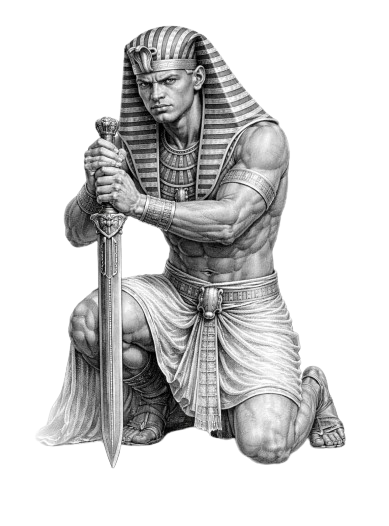
Pharaoh
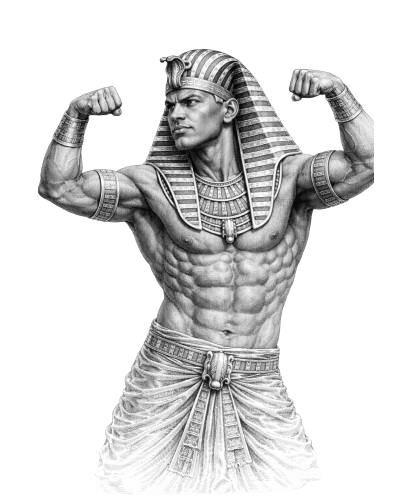
Pharaoh stands as one of the most complex figures in the Exodus narrative, and in this musical his character is approached with both gravity and depth. He is not presented merely as an antagonist, but as a man imprisoned by the very throne he sits upon. His story is a tragedy of inheritance, identity, fear, and the corrosive nature of absolute power.
Raised from birth to believe he is divine, Pharaoh has never known a world where his word is not law. He inherits an empire that demands strength above mercy, certainty above humility, and control above compassion. His identity is shaped by generations of rulers who believed the stability of Egypt depended on unyielding authority. His crown is not simply an ornament of power. It is a cage forged by expectation, tradition, and fear of weakness.
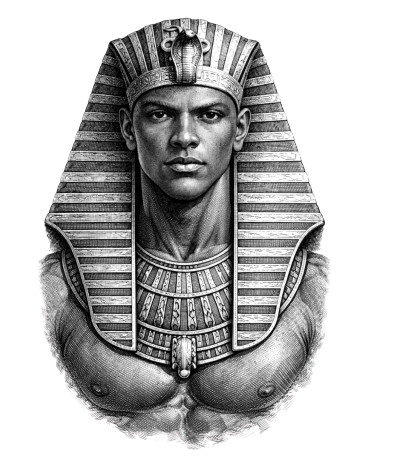
Pharaoh’s emotional arc reveals the cost of empire on the human soul. Every decision he makes is shaped by terror of losing control. Every plague exacerbates the fracture within him. His refusal to release the Hebrews is not merely political. It is existential. If he yields, even once, the illusion of his divinity shatters. His resistance is a desperate attempt to maintain a worldview where he is central, unquestioned, unbreakable. But the gods he invokes cannot shield him from the truth that unfolds: the empire he protects is built on stolen breath.
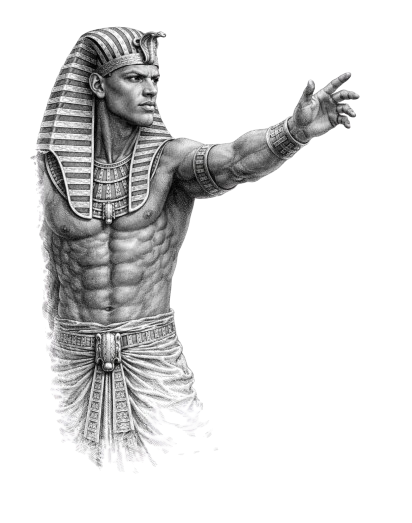
This musical emphasizes the tragic dimension of Pharaoh’s character. His unraveling is not portrayed with melodrama, but with psychological precision. Each plague strips away a layer of his certainty. The death of his firstborn tears the final thread of his identity. Pharaoh becomes a man confronted with the devastation caused by his refusal to let go of power. The audience is meant not to excuse him, but to understand the humanity buried beneath the crown.
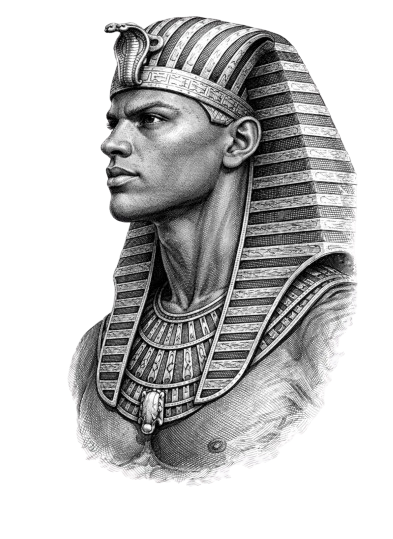
Vocally, Pharaoh is a bass-baritone whose sound must carry weight, authority, and sharp emotional contrast. His melodic lines begin controlled, regal, and deliberate. As the story progresses, his vocals fracture, revealing a man unraveling. His rap sections are pointed, forceful, and increasingly desperate, mirroring the erosion of his internal stability. His final moments are delivered with chilling stillness, a man facing the consequences of defying a God he cannot comprehend.
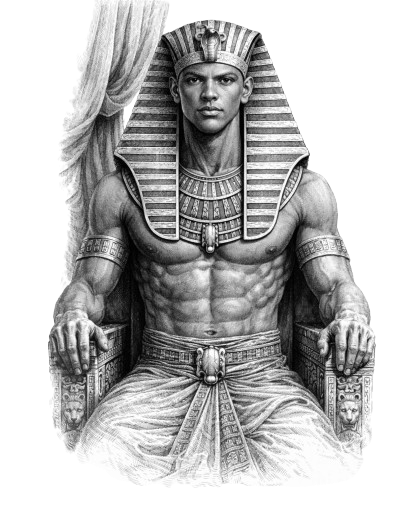
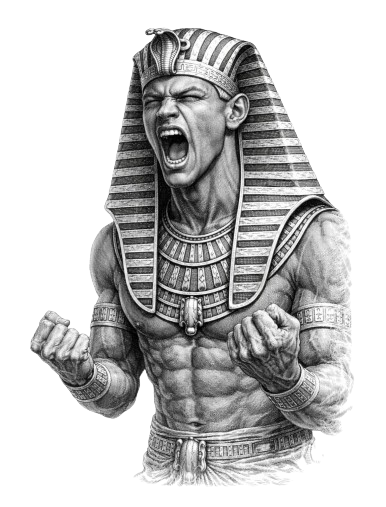
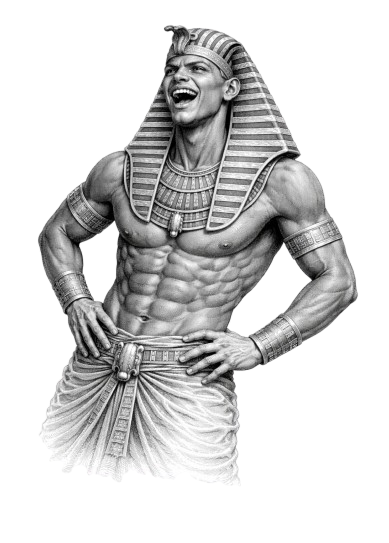
Pharaoh’s presence onstage is defined by militaristic staging and rigid movement. His guards respond to the slightest gesture. His court mirrors his posture and breath. His world is built on order, symmetry, and discipline. This heightens the visual and emotional collapse of his character as the plagues intensify. The more Egypt crumbles, the more Pharaoh clings to ritual, tradition, and performance of sovereign identity. His breakdown is both inward and structural.
Yet Pharaoh’s tragedy also deepens the spiritual stakes of the story. The Exodus narrative is not a battle between two human figures. It is a confrontation between a living God and a man shaped by a system that taught him he was a god. This musical portrays that confrontation not as spectacle, but as revelation. Pharaoh does not fall because Moses rises. Pharaoh falls because truth exposes the lie at the center of his identity
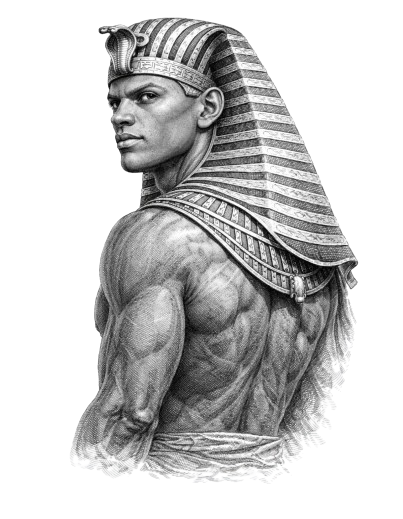
Symbolically, Pharaoh represents the darker aspects of human power. He is fear disguised as strength, insecurity disguised as confidence, and spiritual blindness disguised as righteousness. He is not simply an oppressor. He is a warning. Empire is not abstract. It is the product of human frailty elevated to divine status. Pharaoh is the embodiment of what happens when a leader becomes trapped in his own myth.
Yet Pharaoh’s tragedy also deepens the spiritual stakes of the story. The Exodus narrative is not a battle between two human figures. It is a confrontation between a living God and a man shaped by a system that taught him he was a god. This musical portrays that confrontation not as spectacle, but as revelation. Pharaoh does not fall because Moses rises. Pharaoh falls because truth exposes the lie at the center of his identity.
When he finally cries out at the death of his son, the audience hears not the roar of a tyrant, but the grief of a father. His power cannot shield him. His guards cannot defend him. His gods cannot save him. His collapse is the collapse of empire itself.
unchecked, can enslave as surely as any chain.
Pharaoh is one of the most profound roles in this musical because he embodies the central tension of Exodus: the conflict between power and freedom, pride and humility, self and surrender. His tragedy deepens the triumph of the Israelites and reminds us that the human heart, left unchecked, can enslave as surely as any chain.
He is not the hero.
He is not the victim. He is the caution.
He is the warning written in stone and sorrow.
He is the voice of empire collapsing under the weight of truth.