
Young Miriam
Young Miriam is the earliest spark of courage in the Exodus narrative, a child who sees truth long before the world around her is ready to face it. Though small in stature, she carries a clarity and spiritual intuition that surpass many of the adults in her community. Her voice becomes the first prophetic whisper in a story that will one day shake empires.
In the musical, Young Miriam is the heart of the early chapters. She is the child who watches the river with wide, determined eyes. She is the girl who refuses to let fear silence her. While others tremble at Pharaoh’s decree, Young Miriam steps forward with a bravery that is astonishing in its simplicity. Her courage is not loud. It is clear. It is the kind that rises from love rather than defiance.
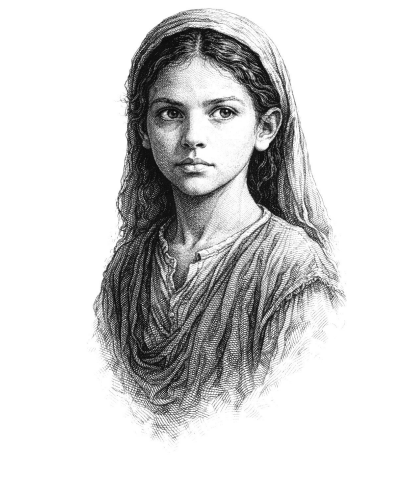
She is the one who understands, even in childhood, that survival sometimes requires bold and terrifying decisions. When she suggests placing her infant brother Moses in the Nile, it is not an act of recklessness. It is an act of intuition shaped by observation, hope, and spiritual insight. She knows the habits of Pharaoh’s daughter. She knows the path of the river. She knows that sometimes salvation hides where danger seems strongest. Her guidance becomes the first way God moves through Israel in this story.
Young Miriam’s emotional landscape is shaped by the trauma unfolding around her. She sees soldiers march into her community. She hears the cries of mothers. She feels the tremor of fear in her father’s breath. Yet instead of collapsing under the weight, she becomes a steady presence. She carries resolve beyond her years. Her strength does not deny her vulnerability. It transforms it.
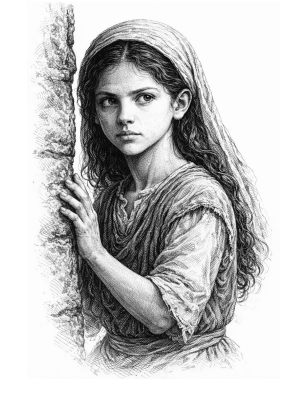
Dramatically, Young Miriam’s scenes are moments of intimacy and tension. She moves with agility and purpose. Her physicality is small but determined. When she stands in the shadows watching Pharaoh’s daughter find Moses, the audience feels the suspense of a child trying to alter the fate of a nation with nothing but faith and breath. She is both witness and guardian.
Symbolically, Young Miriam represents foresight. She is the first to believe that liberation is possible. She is the first to protect the one who will one day stand before Pharaoh. She is the first to hear the quiet rhythm of God moving in the background. She is a child, yet she becomes the keeper of destiny’s first light.
Her journey is simple but profound. She helps save her brother. She keeps hope alive. She learns early that faith requires action. And she carries a rhythm in her heart that will one day become the drumbeat beneath Israel’s freedom song.
Young Miriam is not merely a child in this story.
She is the first voice of deliverance.
She is the bravery that begins the story.
She is the rhythm the nation will one day follow.