
Hebrew Women
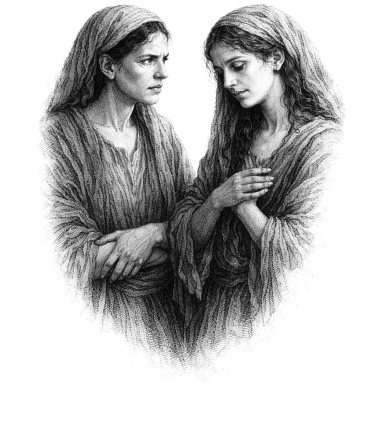
The Hebrew Women represent the resilience, memory, and quiet strength of a community living under the crushing weight of empire. Their presence in the musical expands the emotional landscape beyond what can be expressed through mothers or laborers alone. They embody the women who carry stories, endure hardship, support families, comfort the grieving, and navigate oppression with wisdom shaped by
generations.
These women are the emotional historians of Israel. They remember the days before the worst decrees, the songs their grandmothers sang, and the whispered prayers that kept their culture alive. Their suffering is not confined to childbirth or loss. It extends to daily life: tending fires while
soldiers patrol outside, carrying water past Egyptian overseers, watching neighbors disappear, and hearing rumors of death before dawn.
The Hebrew Women articulate truths that others feel but cannot say. Their lines often reveal insight, bitterness, humor, grief, and the brutal honesty of lived experience. They question. They name injustice. They refuse to let the community forget its wounds. Their emotional intelligence becomes a compass for the audience, helping viewers understand the toll that slavery takes on the psyche and the soul.
Vocally, the Hebrew Women bring textured harmonies to lament scenes and spoken-word intensity to narrative transitions. Their voices often sit in the middle register, blending tenderness with strength. They can shift from soft, aching lines to sharp, rhythmic patterns when the story
demands urgency or confrontation. They represent the collective voice of a people who have carried pain for so long that it has become part of
their language.
Choreographically, their movement is grounded, expressive, and story driven. They often move together in small groups, symbolizing the
communal bonds that form among women in oppressed conditions. Their gestures emphasize carrying, comforting, lifting, releasing, and
remembering. They embody emotional labor as much as physical labor.
These women are survivors. They have endured generational trauma, yet they remain the emotional glue of the nation. Their presence reminds the audience that deliverance is not only physical escape. It is healing from wounds that run deep. It is remembering, grieving, and learning to
breathe again.
Below are the individual roles within this group:
Hebrew Woman 1
Hebrew Woman 1 speaks with the clarity of someone who has seen too much to soften her words. She brings hard truth into the open. Her lines
often frame reality with brutal honesty as she challenges Moses’s identity, comments on the injustice around her, and reveals the frustration of
people who have waited generations for deliverance.
She is sharp, direct, and unflinching, yet her tone is rooted in care for her community. She is the woman who refuses to pretend things are better than they are. Her voice cuts through fear and denial.
Vocally, she carries a strong mid-range delivery that blends grit with emotional depth. Her spoken lines help anchor scenes in authenticity.
Hebrew Woman 2
Hebrew Woman 2 represents spiritual intuition and quiet resilience. Her lines often reflect sorrow and reflection rather than confrontation. She
speaks from the emotional undercurrent of the community, expressing grief in poetic imagery and questioning with a trembling kind of faith.
She is deeply empathetic and serves as an emotional barometer for the audience. When she speaks, the tone of the scene shifts toward lament or vulnerability.
Musically, she adds softer harmonic layers and background textures that enrich ensemble pieces. She balances the sharper tone of Hebrew
Woman 1 with gentler, more contemplative delivery.
Together, the Hebrew Women give voice to the emotional complexity of the enslaved community. Through them, the audience understands the cost of oppression not only on bodies, but on hearts, minds, and identities. They remind viewers that deliverance must heal more than wounds. It must heal the memory of suffering.
They speak the truths others cannot.
They feel the pain others hide.
They endure with dignity.
They rise with wisdom.