
Stomp Corps / Step Ensemble
The Stomp Corps, also known as the Step Ensemble, is the rhythmic spine of the musical. They do not merely dance. They drive the pulse of the world onstage. Through stomp patterns, body percussion, chest hits, breath work, and ritual movement, this ensemble transforms rhythm into narrative and movement into meaning. Their sound becomes the heartbeat that underlies both oppression and liberation.
The Step Ensemble functions as the invisible force shaping the emotional atmosphere of each scene. In Egypt, their stomps echo the weight of tyranny and discipline. In Hebrew scenes, their breaths and body hits reflect exhaustion, unity, and trembling hope. In moments of divine intervention, their rhythm shifts into something primal and awe-filled, mirroring the presence of a power beyond human control.
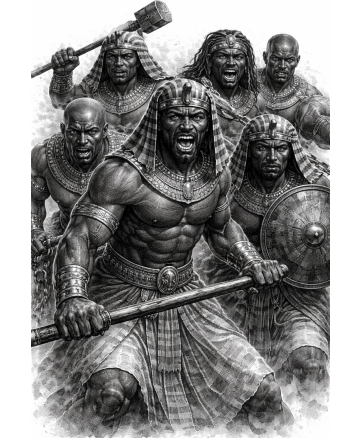
Their choreography draws from stepping traditions within the African and African American diaspora, blending precision footwork with symbolic gesture. They stamp, strike, slide, clap, pulse, and reverberate across the stage with an energy that feels ancient and contemporary at once. They do not move for spectacle. They move for storytelling.
Throughout the musical, the Stomp Corps appears in several pivotal sequences:
In “Exodus,” they awaken the world with layered percussion that evokes both labor and rising resistance.
In “Prince. Stranger.,” they shape the memory-space around Moses, creating rhythmic tension as his identity splits between two worlds.
In “Plagues,” they intensify the chaos, using fractured rhythms to embody a land losing its order.
Throughout the musical, the Stomp Corps appears in several pivotal sequences:
In “Exodus,” they awaken the world with layered percussion that evokes both labor and rising resistance.
In “Prince. Stranger.,” they shape the memory-space around Moses, creating rhythmic tension as his identity splits between two worlds.
In “Plagues,” they intensify the chaos, using fractured rhythms to embody a land losing its order.
Thematically, the Stomp Corps represents:
- The pulse of an oppressed people
- The discipline and brutality of empire
- The shared heartbeat of community
- The collision between human rhythm and divine intervention
- The transformation from labor-driven movement to liberation-driven movement
Their presence blurs the line between character and environment. They are not background dancers. They are spiritual and emotional architecture. They make visible what the characters feel internally. They guide the audience’s breath, tension, and release. They elevate the musical into ritual.
In many moments, the Stomp Corps becomes a kind of Greek chorus made of bodies rather than words. They speak through pattern. They lament through breath. They celebrate through unified footfall. Their choreography does not simply support the story. It embodies it.
The Step Ensemble is the thunder beneath the narrative.
The heartbeat beneath the laments.
The force beneath the miracles.
The echo beneath the final bow.
Without them, the world of Exodus would stand still.
With them, it rises, trembles, breaks, and finally dances into freedom.