
Cradle and Crown
“Cradle and Crown” is the second musical number in Exodus: The Musical.
The scene takes place at dawn along the banks of the Nile River, where Hebrew mothers gather in desperation to save their sons from Pharaoh’s genocidal decree. One of these infants is Moses. The song is a sacred lament, a maternal act of resistance, and the emotional heartbeat that sets the entire narrative in motion.
The number begins as a soft, trembling lullaby – fragile, intimate, sung almost as if the mothers fear being heard by the wrong ears. Their voices blend in minor-key harmonies reminiscent of African American spirituals, Middle Eastern lament, and ancient Hebrew melody. The lullaby’s tenderness is haunted by terror. Each mother rocks her child as if time itself is slipping through her fingers.
Miriam, Moses’s older sister, becomes the spiritual narrator of the moment. Her spoken-word verse rises gently above the lullaby like a prayer from someone too young to lead, yet too wise to remain silent. Her tone carries ancient weight – poetic, grounded, and prophetic. She speaks of faith soaked in linen, fathers whose voices have been destroyed by sorrow, and rivers that might carry mercy where human hands cannot.
As the song progresses, the musical texture shifts. Light whip snaps begin the percussion – then soft claps, foot taps, heartbeat stomps – growing with the mothers’ resolve. The lullaby transforms into a rhythmic chant, signaling unity and defiance. What begins as mourning becomes movement; what begins as grief becomes grit.
The central refrain, “Cradle and crown / Cradle and crown / From water to promise / From silence to sound,” encapsulates the tension of the moment: every child placed in the river is both a cradle of vulnerability and a crown of future promise. The Nile becomes a paradox – a grave for some, a gateway for one who will rise from its waters.
Lighting shifts from muted blues and grays to warmer golds as the song swells, symbolizing divine watchfulness in the moment of greatest fear.
The ensemble’s unified stomps evoke both the heartbeat of a nation and the drumbeat of deliverance still far on the horizon.
The number ends with Miriam’s final, reverent whisper: “He came from the river… but he will rise through the sea.” This line foreshadows the parting of the Red Sea and frames Moses’s destiny long before he speaks a single word in the show.
“Cradle and Crown” is not merely a lullaby – it is the mother wound of the entire Exodus story, the birth cry of a people on the edge of liberation, and a testament to the sacred strength of women who choose hope in the face of annihilation.
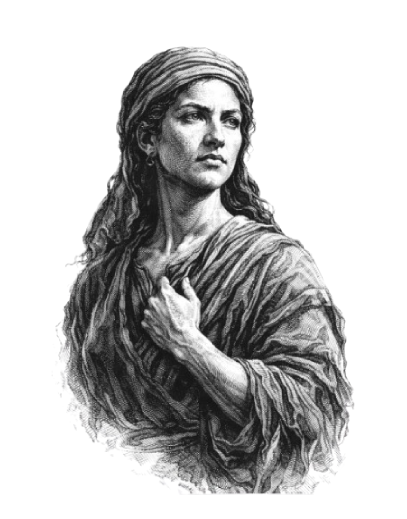
MIRIAM – Female alto
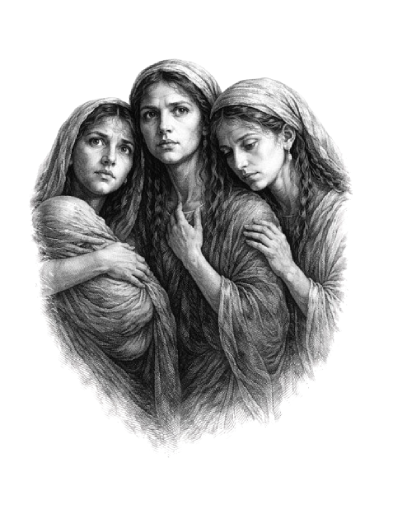
HEBREW MOTHERS – Ensemble (Lullaby Harmony)

OPTIONAL SUPPORT VOICES – Men and Women of Israel
MIRIAM – Female alto (Lead Vocal + Spoken Word)
- Tone: Ancient, soulful, motherwise
- Vocal Color: Warm, earthy, resonant – capable of whisper-soft vulnerability and rhythmic strength
- Function in Song: Narrator, protector, spiritual commentator, emotional anchor
- Influences: Andra Day, India Arie, early Lea Salonga, Rachel Zegler (dramatic clarity)
HEBREW MOTHERS – Ensemble (Lullaby Harmony)
- Tone: Blended, hushed, trembling with reverence
- Vocal Color: Smooth, plaintive, pure – like a collective sigh
- Function in Song: Emotional chorus, maternal lament, rhythmic movement (body percussion later in the number)
- Influences: African American spirituals, Sephardic women’s folk singing, “O Sister, My Sister” ensemble from Hadestown
OPTIONAL SUPPORT VOICES – Men and Women of Israel (Low Drone + Harmony Support)
- Tone: Barely-there hums, undercurrent drones
- Function: Atmosphere, tension building, dramatic support
- Influences: Taizé chant, ambient vocal harmony, shadow choir “Cradle and Crown” Musical Style & Direction
A sacred lullaby that transforms into a rhythmic chant, blending ancient cultural traditions into a modern theatrical frame. The song lives at the intersection of African American spirituals, Jewish lament, Middle Eastern modal melody, and Afro-diasporic body percussion. It begins as a whisper of survival and grows into a heartbeat of resilience.
Musical Arc:
- Lullaby Phase (soft, minor key)
- Sparse instrumentation
- Gentle lullaby harmonies
- Emotional fragility
- Represents maternal fear, surrender, and whispered hope
- Spoken-Word Invocation (Miriam)
- Miriam’s voice becomes the bridge between sorrow and destiny
- Spoken-word sections hover over minimal piano and drones
- Her tone is rooted in grounded storytelling and spiritual urgency
- Rhythmic Build (body percussion)
- Claps, foot taps, and hand-to-chest pulses begin to layer in
- Represents growing unity despite grief
- Rhythm becomes the voice the mothers cannot speak aloud
- Chant Phase (major-minor blend)
- Ensemble chant “Cradle and crown” intensifies
- Prince. Stranger.
- More forward motion, bigger harmonies
- Symbolizes collective determination and the rising prophetic thread
- Prophetic Foreshadowing (final line)
- Miriam’s final whispered line shifts tone toward destiny
- Music resolves into a lingering, reverent silence
- Foreshadows Moses’s crossing through the Red Sea Instrumentation:
- Minimal piano
- Ambient strings (sustained, trembling texture)
- Subtle drones (EBow, harmonium, or digital pads)
- Soft hand percussion
- Ensemble body percussion (claps, stomps, chest hits)
Occasional vocal sighs, hums, and breath FX for atmosphere.
- Prophetic Foreshadowing (final line)
- Miriam’s final whispered line shifts tone toward destiny
- Music resolves into a lingering, reverent silence
- Foreshadows Moses’s crossing through the Red Sea Instrumentation:
- Minimal piano
- Ambient strings (sustained, trembling texture)
- Subtle drones (EBow, harmonium, or digital pads)
- Soft hand percussion
- Ensemble body percussion (claps, stomps, chest hits)
- Occasional vocal sighs, hums, and breath FX for atmosphere.
Musical Direction Notes:
- Lullaby sections must be fragile and intimate, like mothers singing to keep themselves from falling apart.
- Rhythmic sections must feel communal, as if courage is physically rising in the room.
- Transition from lullaby to chant should be almost imperceptible, as if grief transforms into ritual through breath alone.
- Miriam should not sound theatrical – she should sound ancient, personal, and inevitable.
- Vocal blending must prioritize warmth over precision.
Imperfection is authentic.
Body percussion must feel like subdued heartbeat, not aggressive tapping – at least until the chant builds.
The river must be suggested in the score – gentle, fluid, shimmering – a presence that watches but does not judge.
[A deep humming begins – a rich, resonant harmony reminiscent of African American spirituals, evoking generations of sorrow sung into survival. The hum must sound ancient, communal, and mother-worn.]
[Underneath, a faint, sharp “crack” echoes – not a violent stage whip, but the memory of one. A rhythmic punctuation of oppression. It should be subtle, atmospheric, not literal – like pain echoing through a mother’s heartbeat.]
[Mothers enter from different corners of the stage, holding tightlywrapped infants. Their faces are dimly lit, silhouettes trembling. The world must feel sacred, vulnerable, and on the edge of collapse.]
[INTRO]
[Lights fade in slowly on a mist-covered Nile riverbank. A soft, trembling blue wash ripples across the stage, mimicking moving water. Shadows of reeds sway through subtle projection mapping.]
[A deep humming begins – a rich, resonant harmony reminiscent of African American spirituals, evoking generations of sorrow sung into survival. The hum must sound ancient, communal, and mother-worn.]
[Underneath, a faint, sharp “crack” echoes – not a violent stage whip, but the memory of one. A rhythmic punctuation of oppression. It should be subtle, atmospheric, not literal – like pain echoing through a mother’s heartbeat.]
[Mothers enter from different corners of the stage, holding tightlywrapped infants. Their faces are dimly lit, silhouettes trembling. The world must feel sacred, vulnerable, and on the edge of collapse.]
[ENSEMBLE – Hebrew mothers sing softly, lullaby-style harmony]
[Mothers form a loose semicircle along the water’s edge, rocking their children in small, synchronized movements. Their harmony is tender but quivering, as if each breath risks breaking into a sob.]
[Voices blend in a whisper-lullaby, intentionally fragile – a sound meant more to soothe the babies than to be heard by any audience. This opening verse should feel like a prayer whispered into God’s ear.]
Hush now, baby / hush now, child
The water is wide / but mercy is mild
If you float, you live / if you cry, you fall
So, hush now, baby / God hears it all
[YOUNG MIRIAM – spoken word over soft music]
[A warm amber light finds Miriam downstage center. She is young, but her voice carries the weight of the women beside her. She does not sing yet – she speaks with reverent clarity, as if trying not to wake death itself.
[The music underneath is minimal: soft piano, a trembling drone, and distant humming, like the river breathing.]
[Her delivery must feel ancient and poetic – the first sign that this musical views her as a spiritual narrator.]
My mother wrapped him in linen soaked with faith
My father said nothing / his voice already broken
I watched the river cradle him And I whispered to the current:
“Return him to us.” Not the water…
The One who made the water
[ENSEMBLE – acapella]
[Music drops out completely – only human voices remain.
[The mothers step slightly forward, forming a protective crescent shape around the baskets. Their harmony deepens with grief, becoming raw, exposed, almost trembling.]
[Acapella here must feel naked – like every voice risk shattering.]
We gave him to the water
We gave him to the flame
One boy for a thousand tears
One prayer with no name
[YOUNG MIRIAM – sung with growing strength]
[Miriam now sings, stepping into her future as a prophetess. Her voice begins softly, but each phrase grows stronger, more defiant. Lighting shifts from cool blue to rising gold, symbolizing prophetic dawn.]
[Her stance widens; her shoulders square; her voice becomes a pillar for the mothers.]
They take our sons / but not our song
They chain our voice / but we grow strong
He floats alone / we wait and pray
The river may part / and show the way
[ENSEMBLE – body percussion builds, unified stomps and claps]
[The mood transforms – grief solidifies into resolve.]
[Body percussion begins softly: palms to chest, then palms to thighs, then coordinated foot stomps. The ensemble’s movement is ritualistic, like mothers stirring courage through rhythm.]
[Claps and stomps grow in volume and syncopation. This is the sound of women finding power in unity.]
[Lighting warms further, mixing earth tones with shimmering blue water light.]
Cradle and crown / cradle and crown
From water to promise / from silence to sound
[YOUNG MIRIAM – final line, slow, reverent, nearly whispered]
[Spotlight narrows onto Miriam. Everything else quiets. She sings the final line as a prophecy – gentle yet unshakably certain. Each syllable should feel like it is carried by divine breath. The ensemble freezes in tableau, holding the moment in sacred stillness.]
He came from the river… but he will rise through the sea.
[Let the final note and silence linger. This song sets the spiritual tone of the musical. It is not just a lament; it is the beginning of liberation.]
[The music decays into the sound of distant water. No applause. No movement. Just breath, light, and the weight of a nation choosing hope when hope feels impossible.]