
What Have I Become
“What Have I Become?” is the emotional breaking point of Act One, the moment Moses finally speaks for the first time in the musical. Alone in the desert of Midian, he confronts the weight of his past, the crime he committed, and the identity he has never fully understood. The number begins in near silence, with a heartbeat-like rhythm built from breath, wind, and footsteps. When Moses sings, his voice is raw and strained, shaped by regret more than melody. The musical style blends hip-hop cadence, spoken-word poetry, and aching gospel soul, creating a confessional storm that feels human and painfully unguarded.
As the song builds, piano and ambient strings expand the emotional landscape. Moses moves between confession and accusation, admitting that he ran not only from Pharaoh but from himself. The rap section ignites with fast, tight breathwork as rage and grief collide. He questions the God who saved him from the river, demanding purpose or release, begging for identity or silence. The climax rises into a cinematic gospel swell, revealing a voice of destiny inside a man who believes he has none.
The song ends unresolved, with Moses whispering that he was saved from the water but wonders who saves him now. The final note falls away as the distant glow of the burning bush ignites, signaling that his transformation is only beginning.
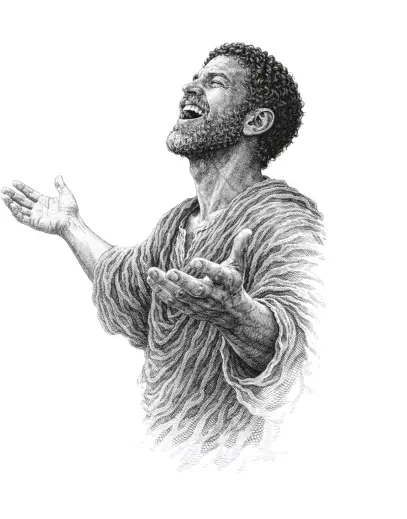
MOSES
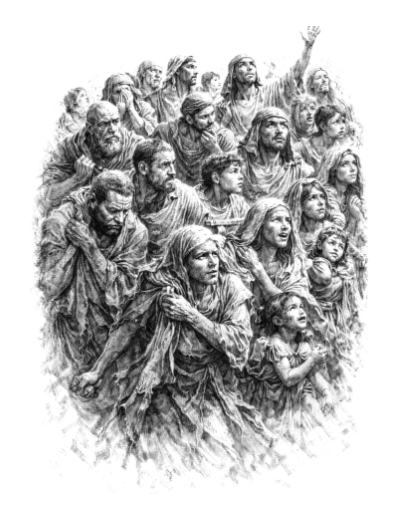
ENSEMBLE

THE VOICE OF GOD
MOSES – Male baritone (solo lead)
Vocal tone: raw, strained, soulful.
Moses carries the entire number. His voice is the breaking point of Act One. He shifts between sung soul, rapid spoken-word flow, and tight rhythmic rap. His delivery is emotional rather than polished, shaped by guilt, confusion, and desperate honesty. This is the first time the audience hears Moses speak for himself, and every line should feel like a confession carved from survival.
ENSEMBLE – Mixed voices (shadow chorus, minimal use)
Vocal tone: distant, atmospheric, wordless.
The ensemble appears only as texture, never as melody. They function as desert wind, memory, and breath. Their hums, sighs, and low harmonic beds create the sonic world Moses is trapped in. They never overshadow him; they serve as echoes of his past and the environment around him.
CHILDREN’S CHOIR – Optional (featured in the bridge)
Vocal tone: pure, fragile, haunting.
A small group of children’s voices may enter during the bridge to create a sacred counterpoint to Moses’s desperate cry. Their sound symbolizes innocence, destiny, and the echo of what Moses was saved for. They do not overpower him. Instead, they rise like a distant memory of the river that once carried him and the promise that still follows him.
THE VOICE OF GOD – Optional low resonance (nonverbal)
Vocal tone: deep, subtle, nearly subliminal.
Used sparingly in the score as a tonal swell or harmonic shift. Not speech. Not melody. Just a faint, divine undertone that nudges the emotional arc without revealing itself fully. It hints that Moses is not entirely alone, even before the burning bush appears.
“What Have I Become?” Musical Style & Direction
“What Have I Become?” begins in near silence, shaped by the desolate soundscape of Midian. The rhythm grows from Moses’s breath, footsteps, and wind across the sand. The opening pulse is hip-hop inspired but minimal, built from body percussion and environmental texture. Every sound creates the feeling of a man speaking aloud for the first time after losing everything.
Moses drives the musical arc. His voice moves between spoken-word confession, tight rhythmic rap, and aching soulful melody. His delivery is raw, strained, and unpolished, as if each line is pulled from a wound he has avoided touching. The style blends cinematic gospel with modern hip-hop and poetic lament, echoing the tension of a soul trapped between past and future.
Instrumentation enters slowly, with trembling piano chords, ambient strings, and soft drone textures. The ensemble provides atmospheric hums and sighs rather than lyrics, creating a shadow chorus around him. The rap section becomes the heartbeat of the number as the tempo tightens and Moses confronts the truth he fled from. During the bridge, an optional children’s choir adds a fragile counterpoint to his shouted plea, evoking innocence and destiny. A faint tonal resonance may suggest the presence of God without revealing a literal voice.
The final chorus swells into cinematic intensity but never resolves into triumph. The music collapses into quiet as Moses whispers the last line, and the desert wind becomes the only rhythm. As the sound fades, the distant glow of the burning bush appears, signaling that his breaking point will soon become his calling.
“What Have I Become?” Lyrics
[MOSES begins alone in a cold wash of desert moonlight. The wind can be heard moving across sand. His first note should feel fragile, like he is testing whether his voice still belongs to the world.]
I was saved from the water
At least that’s what they said
But now I’m out here drowning In the silence of the sand
They gave me a royal position
But never gave me a real place
They showed me ways of the crown
But they never showed me real grace
I wore the finest threads and robes
I had their royal speech
But there was always something that I knew
I couldn’t reach
In every way I looked like them But felt like I was a ghost
While a prince, I was a stranger
At every table I toasted
[The beat softens. A slow pulse taps like footsteps through emptiness. Piano enters with sparse, trembling chords. The lighting narrows as Moses recalls the moment that shattered him.]
Then I saw one of mine
One who was beaten and was torn
Lit the fire that burning inside me That had refused to be born
My anger. Fists clenched. I struck.
Didn’t stop. Didn’t wait
But when I buried that man
Was when I buried my fate
[His voice trembles. Strings swell gently under him, stretching the silence between phrases. Light flickers like distant fire.]
What have I become?
A wound with no scar
A man with no nation A voice in the dark
What have I become?
Just sand in my hands God, what have I become?
I still don’t understand
[Beat tightens. Breath percussion begins. Moses moves closer to the audience, as if confessing directly. His rap is sharp, fast, and carved with urgency. The ensemble hums low, creating a shadow-like undercurrent.]
I tried to be true to the image But I cracked the frame
Tried to be brave for a lineage But now I’m lost in shame
I ran from the blood on my hands
I ran from the throne
I ran from the people, my land, my home
Now I’m alone
I hid in the hills, I buried the fire.
I silenced the song, I smothered desire.
I forgot the Nile, I forgot the name.
Now I’m in denial, just tryin’ to stay sane
[The bridge erupts. Moses steps forward into a harsh white spotlight. His voice is near breaking. Optional children’s choir enters behind him in soft, trembling harmony. The atmosphere becomes electric, as if the desert itself is listening.]
[Pleading with God]
God! If you’re real then say it
If You still chose me then claim it
If You still want me then name it
But if I’m nothing don’t fake it
God! If you’re real then say it
If You still chose me then claim it
If You still want me then name it
But if I’m nothing don’t fake it
[The music swells. Moses sings as if trying to hold himself together. The desert lighting warms toward gold, hinting at the bush that waits.]
What have I become?
A whisper in stone
A shadow still breathing A man left alone
What have I become?
Drawn out of the flood
Now drowning in silence
Now caked in the mud
[The beat slows until it is only wind. Moses sinks to his knees. His final line is barely a breath. A small flicker of flame appears far upstage.]
I was saved from the water… But who saves me now?
[All music cuts. Only the faint glow of the burning bush remains. The silence should feel sacred, like the desert holding its breath.]