
Ashes In the Throne Room
“Ashes in the Throne Room” is a ritual lament fused with modern hiphop, giving Egypt its voice after the death of the firstborn. The people, not Pharaoh, now speak. Mothers, artisans, scribes, and soldiers rise from the ruins to confess their complicity, mourn their losses, and confront the empire that shaped them. The song is both elegy and reckoning.
It opens with a haunting Adhan-inspired call over drones and ambient cello, creating a sacred, mournful atmosphere. No rhythm exists at first, only grief and breath. Traditional Middle Eastern tones set the foundation.
Then the beat emerges. Sub-bass pulses, trap percussion, and breathbased rhythm introduce a slow hip-hop groove that shifts the scene from mourning into reflection. The ensemble’s chant, “Ashes in the throne room,” becomes the anchoring refrain, a ritual chorus that grounds every verse.
Individual Egyptians deliver their verses in contrasting styles. The mother sings with soft devastation. The artisan, scribe, and soldier rap with force and clarity, exposing the structures of labor, hierarchy, and oppression that supported Pharaoh’s power. Their words must feel sharp, political, and deeply human.
The bridge serves as a collective interrogation of the old order, with thin instrumentation allowing each question to land starkly. The final verse declares the death of Pharaoh’s myth, revealing a people who finally see their ruler as mortal.
The song ends by returning to the opening chant, now quieter and more fragile, as the Adhan-like call fades into silence. “Ashes in the Throne Room” is a requiem for an empire and a doorway into the pursuit and fury that follow in “Hunt Them Down.”
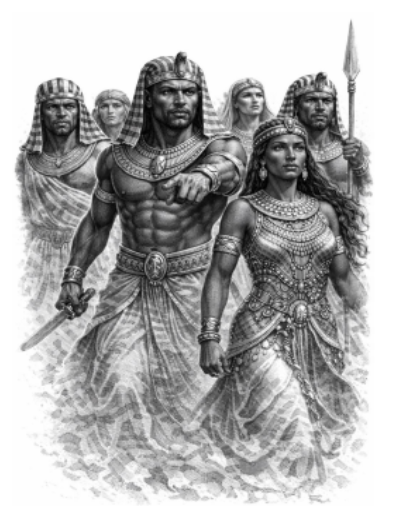
EGYPTIAN ENSEMBLE – Mixed voices (Funeral chant,
Vocal tone: breath-heavy, solemn, unifying. The ensemble serves as the grieving voice of Egypt. They chant the recurring refrain “Ashes in the throne room,” creating a ritual backbone beneath each verse. Their sound includes whispered chants, long vowel mournings, low drones, and Middle Eastern funeral textures. In the bridge, they form a call-and-response structure that questions empire, power, and faith. They never overpower the soloists; they envelop them.
INTRO CHANTER – Solo voice from the Egyptian Ensemble
Vocal tone: haunting, melismatic, ancient.
This soloist opens the song with a call inspired by the Islamic Adhan, rising and falling in slow modal phrases. Their voice must feel sacred, suspended, and grief-soaked. This single singer sets the spiritual tone of the entire piece before the beat arrives. They transition seamlessly back into the ensemble after the call concludes.
GRIEVING MOTHER – Female soloist (Verse 1, sung)
Vocal tone: soft, trembling, sorrowful.
She sings the first verse with haunting clarity, representing maternal grief across Egypt. Her tone must feel intimate and stripped of ornament, as if she is singing into the ruins of her home. She anchors the emotional heart of the number before the rap verses begin.
SCRIBE – Male or female rapper (Verse 3)
Vocal tone: clear, intellectual, urgent.
This verse requires articulate, precise rap flow. The scribe exposes the literary and bureaucratic systems that supported Pharaoh’s power. Their cadence is faster and more philosophical, dissecting Egypt’s false order and the moral cost of ignoring injustice.
SOLDIER – Male rapper (Verse 4)
Vocal tone: gritty, conflicted, forceful.
The soldier’s verse is the turning point, delivered with raw-fire intensity. He exposes the disillusionment of serving a ruler who failed his people. His cadence should sound like a man shedding indoctrination in real time. His verse brings the political condemnation of the empire to its sharpest edge.
OUTRO CHANTERS – Ensemble subgroup (Whispered chant)
Vocal tone: fragile, fading, reverent.
A smaller ensemble reprises the opening funerary chant in soft, breathy tones to close the number. Their sound must feel like smoke lingering over ruins. Their final notes transition seamlessly into the opening pulse of “Hunt Them Down.”
“Ashes In the Throne Room” Musical Style & Direction
“Ashes in the Throne Room” blends sacred lament with modern hiphop to create a soundscape where ancient grief meets contemporary fire. The number opens without rhythm, carried by a haunting Adhan-style solo that rises over low drones and soft cello. This first section must feel suspended in air, holy and heavy, as if Egypt is crying out beneath its own ruins. The tone is funerary and breath-led, shaped by long vowels, restrained chanting, and traditional Middle Eastern colors like ney flute, airy drones, and frame drum resonance.
The shift into hip-hop should arrive slowly, almost imperceptibly. Subbass pulses begin under the chant, followed by trap percussion and tight rhythmic breathing. The groove must feel gritty and spacious, not overwhelming the sacred atmosphere but living inside it. As the beat settles, the song moves from mourning into social reckoning. Each Egyptian who steps forward shapes the sound differently. The grieving mother sings over soft strings with minimal beat support. The artisan’s rap sits on sharper percussive hits and bold low-end. The scribe’s flow becomes more syncopated and cerebral. The soldier’s verse pushes the beat into its most aggressive form, driven by deeper bass and more forceful drum strokes. The differences between these sections show the many faces of a collapsing empire.
Throughout the number, the ensemble chant remains the anchor. Their refrain, “Ashes in the throne room,” must feel ritualistic and solemn, a communal heartbeat that carries the emotional weight of every verse. Harmonies should stay sparse, ancient, and breath-heavy, echoing the style of Middle Eastern funeral tradition rather than Western choral blend.
The bridge marks a dramatic thinning of the instrumentation. The beat pulls back, leaving deep drones and trembling strings as the ensemble questions the crown, the gods, and the lies of the empire. Every line should land with sharp, unsettling clarity.
As the final verse ends, the music returns to its opening stillness. The beat dissolves. The chanting narrows into whispers. The cello fades into trembling quiet. The number closes with the same Adhan-like call that opened the piece, completing a sacred circle of mourning.
“Ashes in the Throne Room” must feel like a kingdom singing its own eulogy. It is grief set to rhythm, collapse set to poetry, and the moment Egypt recognizes its broken reflection in the smoke.
[INTRO]
(A single soloist begins an Adhan-inspired call to mourning. The voice should rise and fall in slow, melismatic phrases, echoing across the
ruined palace. Low drones hum beneath it. Soft cello swells enter like
grief moving through smoke. Ensemble members stand still; faces lifted toward the sound as if hearing a nation lament.)]
Ahhhhh ahh ahh ahh ahhh ahhh ahhh Ahhhhhhhhhhh
[Then follow with inspiration from Kanye West’s “No Church in the Wild.”
(The chant fades into a pulsing ambient beat. Frame drum and sub-bass enter with a slow, gritty groove. Traditional Egyptian timbres blend with modern hip-hop textures. The ensemble steps forward in staggered rhythm, moving like a broken procession.)]
Ashes in the throne room
Dust upon the stones
Silence where the gods once ruled And no one left to own
[VERSE 1: Grieving Mother (Sung)
(Spotlight isolates a mother holding a small garment. Music becomes
minimal: cello, light drone, faint percussion. Her voice should be soft,
trembling, vulnerable. Every line must feel like she is singing into a
hollow world.)]
I bathed him in milk and myrrh
I taught him songs at dawn
Now all I hold is cloth and breath And echoes of what’s gone
[VERSE 2: Artisan (Rap. Spit fire)
(The beat sharpens. Trap hats enter with sharper syncopation. The artisan steps forward with rhythmic precision. Movement becomes angular. String stabs accent his punchlines. He should rap with heat and
truth, like chiseling through stone.)]
I carved their gods in temple light
Polished lies until they shone
But no one carved our children’s names
Or raised them from the stone
I built the crown they wear in flame
I fed the beast and cheered its name
Now silence reigns, and in its face – I see the price of power and shame
[CHORUS: Ensemble (Chant)
(The ensemble gathers in a semicircle, chanting in a slow, heavy rhythm. Their sound must feel ritualistic and ancient, as if the nation itself is speaking. Bass and frame drum deepen the pulse.)]
Ashes in the throne room
Ashes in the grain
Ashes in the bloodlines Ashes in our shame
[VERSE 3: Scribe (Rap. Spitfire)
(Beat becomes more syncopated. Low strings tremble. The scribe steps into the light with fast, articulate flow. His delivery should slice through
the air with clarity and urgency.)]
We called it order, built on backs
And now the walls are caving
We blamed the ones who did the work
The ones we loved enslaving
You cannot raise thrones on broken breath
Or feast while others fast
You cannot build futures out of bones And think the past will last
[BRIDGE: ENSEMBLE (Call and Response)
(The beat thins. Only drones and soft drum pulses remain. Ensemble splits into two facing rows, calling questions like a public tribunal. Their voices should feel sharp, accusing, echoing through a ruined hall.)]
Where is the crown?
Who pulled the flame? Who whispered fear And called it fame?
Where are the gods?
Where is the law? Who raised a mask To hide the flaw?
[VERSE 4: Soldier (Rap. Spitfire)
(The groove returns heavier and darker. Sub-bass intensifies. Torches or red light flare behind him. His rap should sound like a soldier
shaking off indoctrination, speaking truth for the first time.)]
He called himself the rising sun
The name all nations feared
But a god who watches children die
Is just a man who disappeared
We buried sons and burned the scrolls
And sang a song to feed his goals
But now the silence speaks instead – And now we see the empire’s dead
[OUTRO: ENSEMBLE (Whispered Chant)
(The beat dissolves. Only ambient drone remains. Ensemble circles inward, chanting in breathy whispers. Their sound should feel like wind
moving through ruins.)]
Ashes in the throne room
Ashes where we trust
Ashes in the silence Ashes in the dust
[EXIT: With an Islamic Adhan call to prayer. Haunting Egyptian Funeral Chant.
(The soloist returns. His voice floats over a fading drone. Lights dim until only smoke and silhouette remain. The chant should taper into absolute silence.)]