
Aaron
Aaron stands as the quiet strength of this story, a man whose voice does not thunder like Moses’s or pulse like Miriam’s, but whose presence steadies the ground beneath their feet. He is the bridge between calling and community, between divine proclamation and human need. Where Moses trembles and Miriam burns, Aaron breathes. His leadership is born not of charisma, but of compassion, and it becomes indispensable to the journey of Israel.
Scripture often presents Aaron as Moses’s spokesperson, but this musical expands him into something far richer: a man who understands people as deeply as Moses understands God. Aaron is the one who hears the tone of the crowd, who reads the fear in their eyes, who knows when to soften the message and when to strengthen it. He is a shepherd at heart, even before Israel becomes a nation.
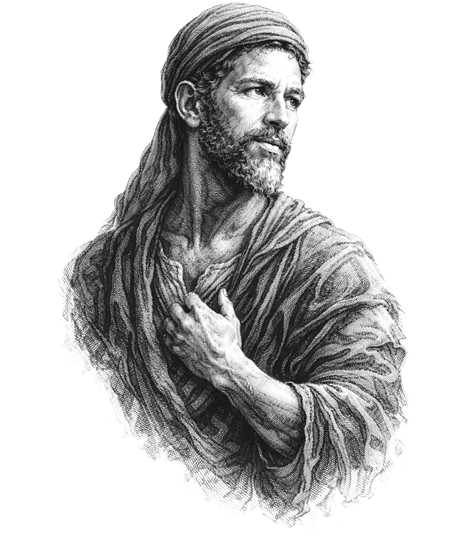
His character carries a quiet courage. Aaron is not the first to run into danger, nor the first to shout truth to power. But he is the one who stands beside Moses when others hesitate. He is the one who holds up Moses’s arms when they falter. He is the one who listens when Moses breaks and speaks when Moses cannot. His faith is steady even when his confidence is not.
Emotionally, Aaron represents the part of every community that heals through gentleness. His empathy is not weakness. It is wisdom. He sees the people not only as a nation to be led, but as individuals shaped by fear, hunger, loss, and exhaustion. His tenderness provides balance to the harshness of oppression and the intensity of Moses’s calling. Aaron’s role is to translate divine direction into human understanding.

Vocally, Aaron is crafted as a tenor whose sound carries warmth, honesty, and steady clarity. His melodic lines are smooth and grounded, offering reassurance during chaos and anchoring the Ensemble during climactic builds. When he harmonizes with Moses or Miriam, his voice acts as connective tissue, binding their emotional extremes into unity. Aaron rarely raps, but when he does, his delivery is calm and measured, emphasizing reason over confrontation.
Dramatically, Aaron’s presence reveals a powerful theme: leadership is not only found in the spotlight. It is found in those who mend the fractures and hold the story together. Moses confronts Pharaoh, but
Aaron comforts the people. Miriam steadies the pulse of the nation, but Aaron steadies the pulse of Moses. He is the one who brings prophetic fire and human fear into the same conversation.
Aaron is also a character who wrestles with his own limitations. His doubts are quieter, but no less real. He questions whether he deserves his role. He feels the pressure of representing Moses to the people and the people to Moses. His humility becomes one of his greatest strengths. Aaron’s emotional arc is not about discovering authority, but embracing the worth of his supportive power.
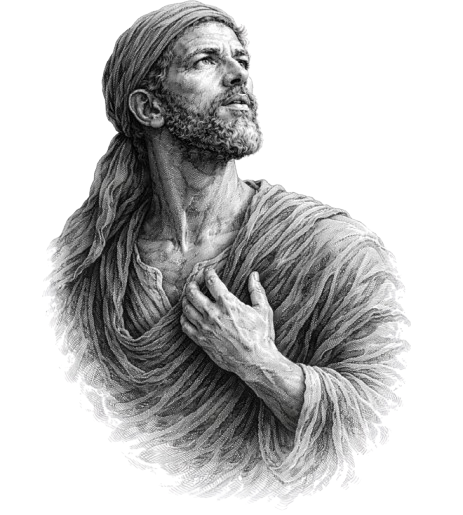
Symbolically, Aaron represents breath. Breath calms. Breath sustains. Breath carries the voice. Breath keeps life moving through pain and progress. In scenes where Israel panics, Aaron breathes for them. When Moses struggles to speak, Aaron becomes the breath behind his words. In Hebrew tradition, breath and spirit share the same meaning. Aaron embodies both.
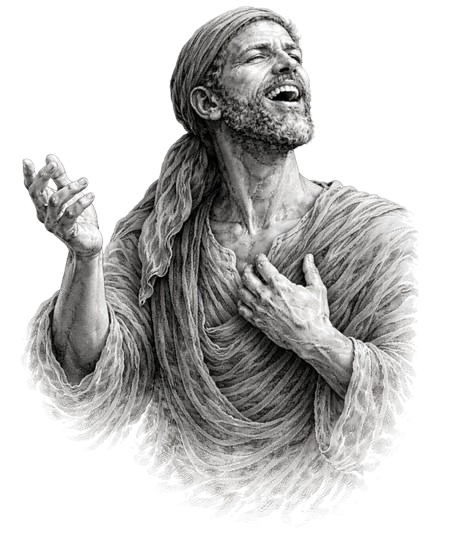
In this musical, Aaron is a reminder that deliverance requires many kinds of strength. Not all leaders roar. Some lead by listening. Some lead by soothing. Some lead by holding space for others to rise. Aaron stands as the embodiment of that sacred, often invisible leadership.
Without him, Moses stands alone.
With him, Moses becomes whole. With him, Israel becomes one.
Aaron is not the loudest voice in the story, but he may be one of the most essential. He is the compassion that binds the nation and the brother who holds Moses steady on the path to promise.