
Exodus
This number is a percussive prophecy – part lament, part uprising – where the themes “Deliver us” and “Exodus” echo through the darkness in multiple vocal textures: whispered, shouted, sung, stacked, distorted, and harmonized. Miriam’s voice rises out of the chaos like a prophetic beacon, while Pharaoh’s Daughter introduces the contrasting world of Egyptian royalty. The song builds relentlessly toward a fever pitch, ending hauntingly with the crack of a whip.
breathlessly into “Cradle and Crown.”
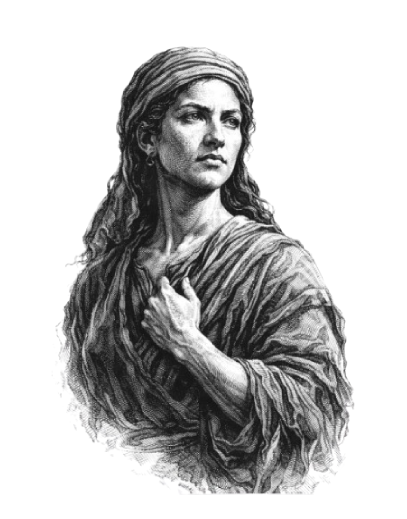
MIRIAM – Female alto
Vocal tone: Andra Day meets India Arie.
Rhythmic, fierce, poetic. Her voice cuts through the darkness with
ancestral weight.
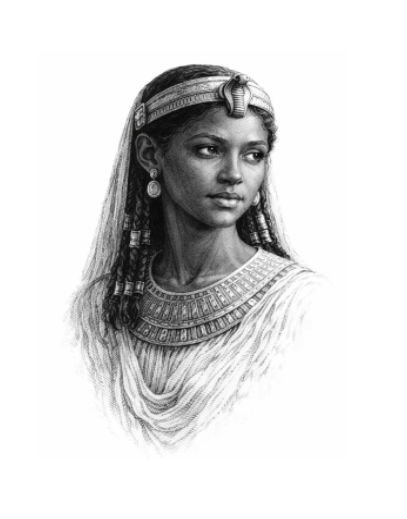
PHARAOH’S DAUGHTER – Female soprano
Vocal tone: lyrical, fluid, mysterious. She provides a contrasting melodic line that embodies privilege, beauty, and distance.
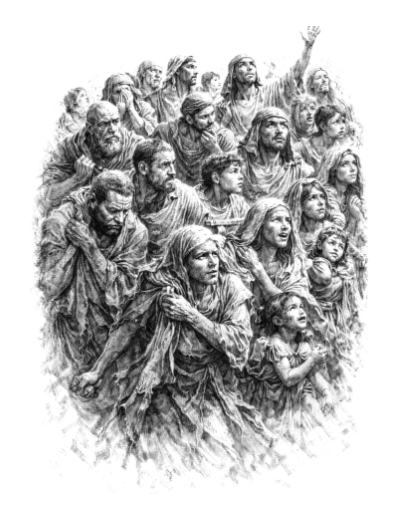
ENSEMBLE – Mixed voices
Whisper, chant, rap, stomp, and polyphonic storytelling. Their overlapping rhythms create a sonic world that feels ancient, oppressed
“Exodus” Musical Style & Direction
- Deep breath FX and layered consonant patterns
- Polyrhythmic Afrobeat undercurrents
- Call-and-response chants
- Sung refrains and spoken-word poetry
- Layered humming and choral harmonies
- Sharp rhythmic steps and hands-to-chest accents.
- “Alexander Hamilton” (Hamilton) – rhythmic narrative propulsion.
- “Circle of Life” (The Lion King) – ritualistic world-building.
- “Deliver Us” (Prince of Egypt) – spiritual lament raised to epic scale.
- “This Is Me” (tribal remix) – drum-driven communal release.
The number must leave the audience in a state of breathless anticipation, fully immersed in a world where sound is survival and liberation begins as a whisper.
[INTRO]
[A single, lone melodic cry pierces the darkness – a hybrid vocalization drawing from Northeastern African ululation, Middle Eastern melismatic
wailing, and ancient Jewish cantillation. It should feel timeless, borderless, and spiritual. The note bends upward, then breaks into breath. Underneath, deep ambient drones begin to vibrate the space –low, rumbling tones suggesting desert wind, distant thunder, and buried history. Slow, irregular foot stomps begin from different corners of the stage. They should sound like labor – the forced cadence of enslaved people dragging stone. These stomps gradually align into a polyrhythmic heartbeat. Ensemble members enter like silhouettes in the dark, moving as if carrying unseen weight. Their presence is felt before their faces are seen.]
[ENSEMBLE (whisper chant – layered voices):]
[Ensemble whispers are close-mic’d, breath-heavy, and layered at different rhythms. Some voices whisper forward on the beat, others whisper behind, creating a murmuring wall of supplication. The whispers should feel like prayers smuggled through clenched teeth – forbidden words escaping despite fear.]
[Staging: Performers remain mostly still, heads bowed, bodies slightly curled inward. Only their mouths and chests move, as if breath itself is resistance.]
Deliver us
From silent graves
Deliver us
From Pharaoh’s ways
Deliver us
With hands unseen Deliver us
By what He means
[MIRIAM (spoken in rhythm – call and overlap):]
[A single warm spotlight reveals Miriam, center stage, as the whispering continues under her. She does not sing yet – she speaks in rhythmic, prophetic cadence. Her delivery should feel like a spoken-word priestess – ancient, grounded, fierce. Her voice cuts through the texture, beginning the shift from whisper to collective chant. She sets tempo and pulse for the entire number.]
Four hundred years Slaves in the mud
Four hundred years A flood of blood
Four hundred years One silent shout
Four hundred years God bring us out!
[ENSEMBLE CHANT – REPEATED + INTERLACED:]
[The ensemble rises from whispers into coordinated chant. Stomps deepen and synchronize.]
[Lighting: Warm gold washes behind them suggest sunrise over Egypt, but front light stays shadowy, keeping their identities obscured, symbolizing dehumanization.]
[Each parenthetical line (“From building tombs…”) is delivered by a different subgroup – some onstage, some in the aisles, surrounding the audience with layers of plea and prophecy.]
[Movement: Subtle shoulder rolls, breath-driven pulses, the hint of chains being lifted.]
Deliver us (Exodus)
(From building tombs) Deliver us (Exodus)
(From mother’s wombs) Deliver us (Exodus)
(From death and sound) Deliver us (Exodus)
(Let God be found)
[FEMALE SOLOIST 1 (spoken rhythm – fierce):]
[A woman steps out from the ensemble, illuminated by a tight spotlight, stepping into the poetic narrative with sharp, rhythmic spoken-word delivery. Her body moves in small accents – hand gestures, head tilts – like someone telling truth for the first time. Behind her, projections of reeds and water ripple abstractly.]
The river knows A cradle floats
A woman weeps
A future spoke
A mother hides
A basket turns
A prophecy
A fire burns
[PHARAOH’S DAUGHTER (sung – melodic):]
[Lighting snaps to cool moonlight blues as Pharaoh’s Daughter appears stage right, elevated on a platform or balcony. Her voice is pure, lyrical, shimmering – in contrast to the rawness of the Hebrews. She sings with curiosity and tenderness, unaware of the implications of her choice.]
[Movement: She kneels gracefully as if reaching into reeds.]
I found him near the reeds that cry
A boy with storms behind his eyes
He wore no sword
He bore no shame
But something ancient spoke his name (Moses!)
[ENSEMBLE (chant – staggered):]
[The ensemble now chants in staggered entries – like waves rising and falling around the Pharaoh’s Daughter’s line.]
[Lighting alternates rapidly between warm Hebrew tones and cool
Egyptian tones, symbolizing the collision of worlds.]
[Movement: subtle swaying like water.]
Deliver us (Exodus)
(From silent graves)
Deliver us (Exodus)
(From Pharaoh’s ways) Deliver us (Exodus)
(With hands unseen) Deliver us (Exodus)
(By what He means)
[MIRIAM (chanted rhythm):]
[Miriam steps forward again, this time with more urgency. Her chant has rhythm, percussive attack, and poetic force. She becomes the musical spine of the prologue. Ensemble stomps sync with her cadence.]
Who will break the bricks we laid?
Who will split the skies we prayed?
Who will come when no one speaks? Who will rise when courage seeks?
[ENSEMBLE (overlay – call + response):]
[Ensemble splits into two opposing semi-circles. One side asks the call; the other side answers.]
[Lighting: Half the stage in warm amber (call), half in shadow blue (response).]
[Staging: This should feel almost ritualistic – a prophecy being announced and confirmed.]
Who?
Moses will.
When?
Now still.
Where?
Through flame.
Who bears God’s name?
We do.
We will.
We must.
Be still.
[ENSEMBLE: CHANT 2 – ALL VOICES, ECHO + STOMP:]
[Full company joins in. Choreography escalates: synchronized stepping, chest percussion, staff hits.]
[Lights intensify into an amber-and-red palette symbolizing both oppression and awakening. This section should feel like a storm gathering.]
Deliver us (Exodus)
(From building tombs) Deliver us (Exodus)
(From mother’s wombs) Deliver us (Exodus)
(From death and sound) Deliver us (Exodus)
(Let God be found)
[ENSEMBLE (rapid rhythm build – breath + stomp):]
[The rhythm accelerates – breath-percussion layered on stomps, claps, finger snaps, and foot-slides. Ensemble must sound like one enormous heartbeat breaking free.]
[Lights flicker like torches in wind. This is the moment the audience subconsciously knows: the story is about to erupt.]
We’ve been beaten
From building tombs
Deliver us
(From mother’s wombs) From Exodus
From death and sound
Deliver us
Let God be found