
Lift the Staff
“Lift the Staff” is the turning point of Act II; the moment Moses steps fully into prophetic authority while standing before an unbroken sea and a terrified nation. The song begins with reverent stillness as Moses confronts his own fear and the weight of his calling. A soft cello and piano underscore his quiet reflection, while ambient wind textures capture the vastness of the Red Sea pressing against him. The first section is intimate and confessional, revealing a man who does not feel like a hero yet refuses to abandon his people.
Then the beat enters.
The music shifts from meditative orchestration into a pulse-driven, hiphop infused anthem. Moses’s voice transforms from poetic melody into forceful rap, delivered with urgency, rhythmic control, and the uncompromising conviction of a prophet speaking truth to a panicked crowd. The rap section must feel like lightning breaking through silence, a roar cutting through the fog of fear. His flow blends spiritual authority with lyrical fire, echoing the complexity of Marshall Mathers, the clarity of Bob Marley, and the emotional weight of John Legend.
The Israelites serve as the invisible audience within the song. Moses raps directly to them, confronting their doubt, challenging their fear, and reminding them of every miracle they have already witnessed. His words are confrontational but loving. Sharp but purposeful. Every line is designed to shake the people awake and anchor them in faith.
God’s presence appears not as a solo voice but as a sacred harmonic pad. Layered vocal chords shimmer underneath Moses’s melody, creating a divine response that does not interrupt him but strengthens him. Whenever Moses sings of calling, fire, or trust, the divine harmony blooms behind him, soft but unmistakable. It becomes the sonic symbol of God’s reassurance.
The musical arrangement builds steadily throughout. The orchestration expands with pulsing strings, swelling brass, and subtle synth textures that carry modern epic weight. The hip-hop beat becomes denser and more insistent, mirroring the bravery rising in Moses’s chest. By the time he approaches the final refrain, the entire soundscape lifts into cinematic grandeur.
The climax comes when Moses transitions from rap back into soaring melody. His voice becomes full, legato, almost trembling with awe as he declares why he lifts the staff: not for proof, but for promise. Not for pride, but for truth. The orchestra swells. Percussion slows. Silence holds for a beat as Moses raises the staff.
The final chord is reverent and suspended. The sea begins to move. Wind surges. The people gasp. The music does not explode. It breathes. It opens. It prepares the stage for the miracle that will follow in “The Breath Between the Waters.”
“Lift the Staff” must feel like a man stepping into destiny, a nation recovering its faith, and the first heartbeat of deliverance.
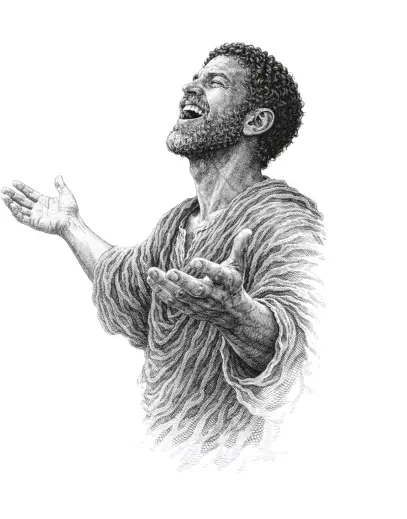
MOSES

THE VOICE OF GOD
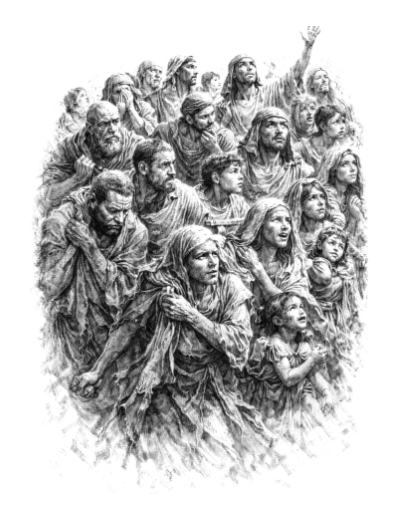
ISRAELITE ENSEMBLE
MOSES – Male baritone (Lead Vocal: melodic + rap authority)
Vocal tone: John Legend for melodic clarity, Marshall Mathers for percussive rap flow, Bob Marley for spiritual resonance.
Moses carries the entire emotional and musical architecture of the piece. He begins in a breathy, reverent register as he confronts the calling set before him. When the beat enters, he shifts into sharp, rhythmic rap with full prophetic conviction. His lines must feel urgent, driven, and unfiltered, as if truth is burning through him faster than he can speak it. His melodic sections rise with deep soulfulness, becoming the spiritual culmination of his leadership. Moses sings to heaven and raps to the people. He is the lightning rod of this number.
THE VOICE OF GOD – Layered harmonic pad (No soloist)
Vocal tone: sacred, resonant, genderless.
God does not speak with a single voice. Instead, the presence of God appears as a shimmering, layered vocal harmony beneath Moses’s melodic lines. This harmonic pad should sound like breath turned into light: soft, warm, and enveloping. It answers Moses without interrupting him, reinforcing divine assurance each time he recalls the fire, the calling, or the promise. God’s presence is heard more in resonance than in literal words.
ISRAELITE ENSEMBLE – Mixed voices (Panic echo + responsive crowd energy)
Vocal tone: afraid, restless, fragmented, human.
The Ensemble does not dominate this number, but they serve as the emotional environment Moses must pierce through. Their role is to echo breath, panic, whispers, and scattered reactions. They may chant short fragments, gasp collectively, or murmur lines that reflect the chaos of the moment. Their presence intensifies the stakes and underscores Moses’s authority when he begins addressing them directly in the rap section. They do not sing in harmony. They react.
NO SOLOISTS OTHER THAN MOSES
This song belongs to Moses.
His voice, his calling, his authority.
The Ensemble and God’s harmonic presence exist only to frame and amplify his transformation.
“Lift the Staff” Musical Style & Direction
“Lift the Staff” is a cinematic prophecy anthem that fuses soulful orchestration with high-velocity hip-hop. The number must feel like a spiritual awakening unfolding in real time, with Moses stepping from uncertainty into full prophetic authority. The music and staging should reflect a world caught between collapse and deliverance.
The song begins in near stillness. Solo cello and soft piano create a spacious, reverent soundscape. Wind textures whisper through the orchestra, suggesting the vastness of the Red Sea and the vulnerability of the people standing behind Moses. His opening melodic lines are breathy and intimate, shaped by doubt and awe. The orchestration leaves room for silence, allowing the weight of the moment to settle on the audience.
When the beat enters, the entire musical world shifts. The drums should feel like a heartbeat gaining resolve. The energy grows as strings begin short pulse patterns and low brass adds tension. Trap elements and rhythmic breath accents subtly infuse the score, preparing the ground for Moses’s rap. The transition should not feel abrupt. It should rise naturally from the melody, like courage breaking through fear.
The rap section is the engine of the number. Moses delivers with authority, rhythmic precision, and emotional fire. His flow must be sharp, literate, and relentless. Percussion intensifies beneath him, with layered hi-hats, deep kick patterns, and syncopated claps. The orchestration swells behind the rap rather than overshadowing it. Strings play tremolo, brass adds stabs of intensity, and the score pulses with urgency. The sound must feel like the desert coming alive under his voice.
God’s presence appears as a harmonic pad. Layered vocal chords bloom beneath Moses’s melodic lines, creating a divine echo. These harmonies should feel warm, enveloping, and genderless. They do not overpower Moses. They affirm him. Whenever he references calling, trust, or fire, the pad should shimmer around his voice, creating the sense that heaven is singing inside the silence.
The Ensemble contributes only as breath and tension. Their murmurs, gasps, and scattered reactions form a sonic texture that shows fear still present in the air. They do not sing full lines until the miracle is imminent.
Their role is emotional, not musical.
The final section returns Moses to melody, but with new authority. The orchestration blossoms into full cinematic grandeur. Strings rise in wide, sweeping arcs. Percussion slows into powerful, spacious hits. The harmonic pad grows brighter. Moses’s voice expands into full chest tone, singing with awe instead of fear.
The climax arrives when Moses physically lifts the staff. At that moment, the music should open like a horizon being torn apart. The beat drops out. A single sustained orchestral chord holds. Wind surges. The sea begins to move.
The number ends in reverent suspension. No triumphant resolution. Only the breath before the miracle splits the world open.
“Lift the Staff” must feel like destiny answering fear and faith shaking the sea awake.
[INTRO – Solo cello plays sparse, trembling phrases. Soft piano enters in broken chords. Wide atmospheric wind textures fill the space, as if the Red Sea is holding its breath. Long pauses between notes create sacred stillness.]
[MOSES:]
[(sung – soft, breathy, intimate mic tone)]
The water waits
But does not part
The sky is mute
But not my heart
I am no god
I am no king
I am a man
Who heard Him sing
[MOSES:]
[(sung – slightly stronger, strings beginning a low pulse beneath him)]
I’ve walked in silence
I’ve breathed in dust
I’ve questioned fire
And walked in trust
But this –
This is the edge
Of everything we said we knew
And I have a word
But I give it to you…
[TRANSITION – A deep heartbeat-like kick enters. High strings begin rhythmic pulses. Subtle synth bass swells. Moses steps forward into center light as the rhythm gathers tension.]
[MOSES:]
[(rap – to the Israelites, strong, percussive, trap beat fully present)]
You want me to part the sea with a stare?
You want me to fix what’s not fair?
You want fire from the sky, lightning in air – While you stand there, frozen in prayer?
You think freedom comes without fear?
You think God forgot we’re here?
You think chains were better than calling His name Because at least you could measure your pain?
You want me to move, but won’t take a step
You want God to speak, but hold your breath
You want miracles dressed like math But this ain’t safety – this is the path
I didn’t stand in fire for applause
I wasn’t sent to rewrite laws
I came to drag you through your doubt
To tear the voice of fear out your mouth
You think faith is seeing the wind stand still? You think deliverance fits your will?
You want a god who follows you
But you serve a God who carries through
So, look at me – Look at my hands
They shake like yours But still I stand
I’m not made of marble
I’m not made of flame
But I know the One
Who took my shame
So, either follow
Or turn around
But don’t you blame
This holy ground
[TRANSITION BACK TO SUNG REFRAIN – Beat softens. Strings widen into long, swelling chords. Choir pad (wordless) enters, representing divine presence lifting Moses’s voice.]
[MOSES:]
[(sung – melodic, strong, supported by warm bass and rising strings)]
I lift this staff
Not for proof
But for promise
And for truth
I lift this staff
Not to boast
But to hold
What matters most
[MOSES:]
[(sung – voice grows fuller, brass entering softly beneath, rhythmic drums thinning)]
Not by sword
Not by plan
But by His breath
In dust-born man
So, if the sea
Still blocks the road I lift this staff And trust He knows
[FINAL REFRAIN – Strings crescendo. Low brass swells. Wind FX gather. Moses raises the staff as all rhythm drops out.]
[MOSES:]
[(sung – in reverent awe, echo added, choir pad bright beneath)]
Let this step
Be understood
Let this faith
Be more than good
I lift this staff
I do not flee
I walk toward fire
I trust the sea
[OUTRO – Final orchestral chord holds in suspended tension. Wind surges. Low drones rise. Water begins to pull back. The people gasp as lights flare. Fade into the instrumental miracle of “The Breath Between the Waters.”]