
Prince. Stranger
“Prince. Stranger.” is the sequence that bridges from the “Cradle and Crown” montage to the adult Moses we meet in the desert. The number unfolds as a memory-poem told through chant, spoken word, and rhythmic storytelling. Moses never sings; the world sings about him, shaping him before he can shape himself.
This song traces his early life with swift, cinematic movement. We see the Hebrew infant rescued from death, the child raised inside the walls of Pharaoh, the boy taught royal power yet unaware of the blood beneath it, and the young man caught between two identities that refuse to claim him. As the ensemble narrates, the music shifts from mystical hush to layered stomp and chant, building toward the defining moment when Moses kills an Egyptian overseer. The act shatters the rhythms, fractures the voices, and sends him fleeing into exile.
Miriam and Aaron anchor the storytelling with poetic spoken word that grounds the myth in emotional truth. Their voices frame Moses as both chosen and lost, prince and outsider, beloved and unknown. By the final whispered command run, boy, run, Moses stands stripped of every title he has ever held.
This number must move quickly, feel ancient, and hit with ritual weight. It reveals the fracture in Moses’s identity and positions the audience to understand the man who will soon meet God in the wilderness. “Prince. Stranger.” Primary Singers.
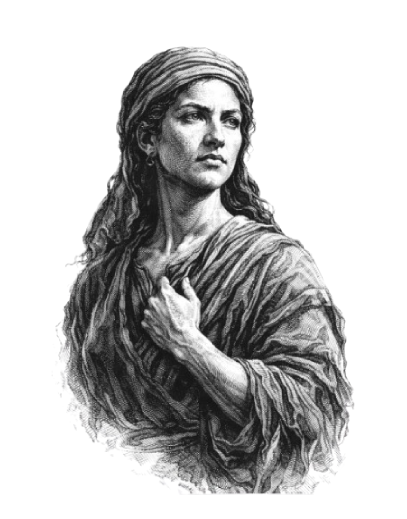
MIRIAM
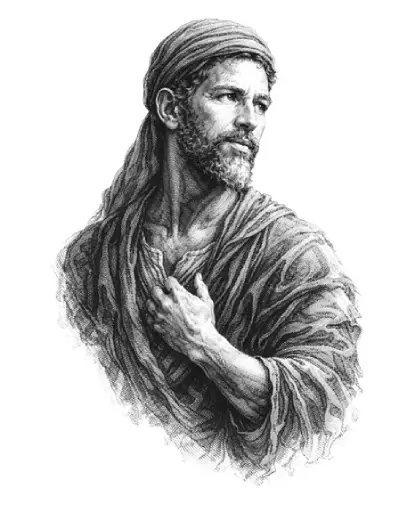
AARON
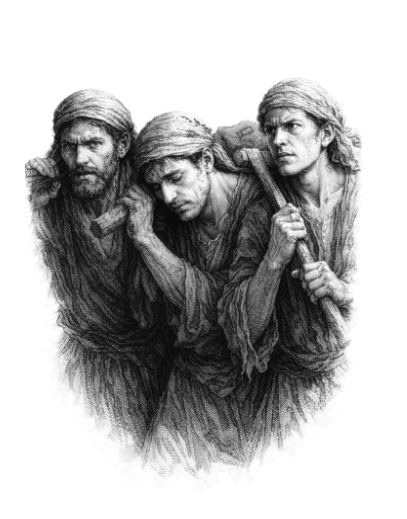
HEBREW LABORERS
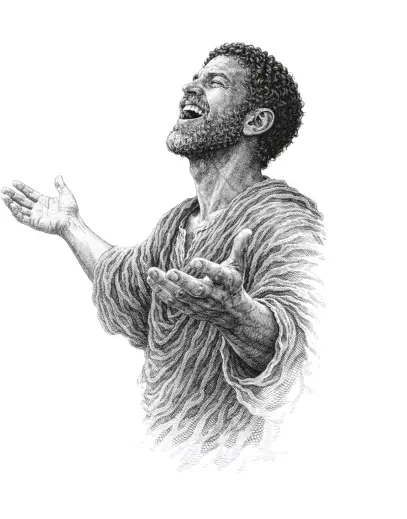
MOSES
MIRIAM – Female mezzo alto
Vocal tone: ancient, soulful, steady.
She provides the spiritual frame of the memory. Her spoken word has the weight of prophecy and the intimacy of family. Miriam is the keeper of Moses’s true story, and her voice anchors the entire sequence.
AARON – Male baritone
Vocal tone: rhythmic, grounded, percussive.
Aaron opens the chant and carries the narrative pulse. His delivery blends spoken verse and melodic chant, giving the memory its forward momentum and emotional clarity.
PALACE WOMEN – Female sopranos and mezzos
Vocal tone: elegant, smooth, shaped by Egyptian ornamentation.
Their lines embody privilege and court culture. They sing Moses into a life that never quite fits, wrapping him in beauty, expectation, and controlled melody.
TUTORS / SCHOLARS – Mixed voices
Vocal tone: clipped, ceremonial, precise.
They recite in rhythmic patterns that feel instructional and rigid. Their voices build the architecture of Moses’s royal identity while erasing the roots he doesn’t yet know.
HEBREW LABORERS – Mixed ensemble
Vocal tone: percussive, communal, heavy with lived weight.
Their chanting and body percussion form the heartbeat of the number. They represent truth, suffering, and the identity Moses has not yet claimed.
WITNESSES OF THE KILLING – Mixed voices
Vocal tone: fractured, reactive, jagged.
These brief; sharp vocal lines narrate the violent moment in fragmented rhythm. Their contradictions recreate the chaos of memory and guilt.
THE WHISPERING VOICE – Soloist, gender flexible
Vocal tone: close, intimate, almost unnervingly calm.
This voice delivers the final judgment. One word, stranger, cuts deeper than the act of violence itself.
MOSES – Silent role
He does not sing. His silence is the dramatic core of the number. Every voice becomes a force shaping him until they abandon him, leaving him alone in a wilderness of identity.
“Prince. Stranger.” Musical Style & Direction
“Prince. Stranger.” moves like a ritual memory rather than a traditional song. The musical language begins in a low, haunting hum that feels ancient and suspended in time. The sound is intimate at first, almost whispered, then grows into layered chant, stomp, and rhythmic storytelling that pulls Moses’s past into the present.
The style blends Afrobeat pulse, dark gospel weight, and the hypnotic repetition of stepping and body percussion. Every rhythm should feel grounded in the earth and the labor of the Hebrew people. Voices overlap, interrupt, and build tension. The Egyptian lines are smooth, ornate, and controlled. The Hebrew lines are raw, percussive, and communal. Their collision creates the fracture inside Moses’s identity.
As the story intensifies, the music thickens with foot stomps, chained rhythms, and sharp, chanted phrases. Instrumentation stays minimal and atmospheric: cello drones, hand drums, low strings, distant humming, and breath-driven textures. Egyptian pop elements can surface briefly, stylized and rigid, then break apart as the truth beneath the palace training cracks open.
When Moses kills the overseer, the score splinters. Harmonies collapse into scattered fragments. The tempo destabilizes. Memory becomes chaotic. Voices narrate the violence in jagged rhythm until a single whisper cut through the noise and names him stranger.
The song ends in near silence. The body percussion fades. The chanting dissolves. Moses stands alone in a world emptied of rhythm as the opening bars of “What Have I Become?” begin. The transition should feel inevitable, as if this rupture has been waiting beneath the surface since the moment he was drawn from the water.
[AARON – low humming that grows into a slow, steady chant.
Ensemble breathes softly underneath, creating a distant pulse.]
He was drawn from the water
By gold covered hands
Fed in stone temples
Trained in strange lands
They named him son, but was never theirs
He grew in palaces, he climbed their stairs
They crowned him prince in rooms of stone But never told him he was alone
He spoke their tongue; he wore their crest
But never knew what beat his chest
[Aaron strikes his chest once, a resonant percussive cue.]
A Hebrew heart behind the stitches A tale of silence wrapped in riches
[ENSEMBLE – body percussion begins: soft foot stomps, palm hits, and layered breaths. Rhythm builds gradually.]
He learned the way of the kings
But not the suffering of his people
He held the rod of royal power
But shook beneath the steeple
[AARON – moves into spoken word, rhythmic and grounded.]
One day the sand turned red with wrath
He struck a man, then fled the path The crown fell off, a life erased
The prince became a man disgraced
He ran from blood, from law, from throne
He ran until he was all alone
A stranger in a stranger’s land
No fire, no name, no promised land
[ENSEMBLE – whispered chant, tightening to a percussive whisperstomp pattern. Circle around Moses begins to form.]
Run, boy, run Son of none
Run, boy, run Where’s your name?
Run, boy, run
You’re no one
Run, boy, run
Wear your shame
[Scene shift: Ensemble breaks apart in sharp, staggered motion. Moses moves through them as if pushed by memory itself. Lights tighten.]
[Moses flees. The ensemble’s bodies create shifting “walls” of Egypt closing behind him as he becomes a fugitive.]
[Final chant slows. Stomps fade. Breaths soften. Moses emerges alone in the wilderness.]
[Lights fall to a single, desolate wash as the opening bars of “What Have I Become?” begin.]