
The Cry
“The Cry” is a ritual lament, not a traditional musical number. It is the sound of Egypt awakening to the death of its firstborn, a moment so heavy that melody cannot carry it and rhythm dare not intrude. The piece begins in complete silence, broken only by a single ceremonial drum strike that feels like the heartbeat of a nation stopping at once. From this void rises a sacred call inspired by the Islamic Adhan, sung in slow, melismatic phrases that rise and fall like grief itself. The voice should feel ancient and holy, preparing the air for the mourning that follows.
As the Adhan-like call expands, the Egyptian ensemble enters in layers. They do not sing lyrics in harmony. They lament. Their sounds draw from Janazah funeral traditions: long vowels, breath-heavy chanting, moans, wails, trembling phrases, and non-lexical murmurs that feel like a community breaking open. Their voices stack one by one, not like a choir, but like grief gathering force. The texture should be cinematic and Middle Eastern in tone, yet stripped of all ornament, allowing the raw human pain to be the primary instrument.
The ensemble’s chant “We bury our sons” forms the centerpiece of the lament. It must feel ritualistic, repetitive, and devastating, as if the entire nation is performing a funeral together. Overlapping cries of “My son,” “My child,” and whispered pleas should swirl through the soundscape. Low strings grow slowly underneath, trembling rather than singing, adding weight without melody.
Pharaoh enters through this wall of grief. His voice does not sing. It breaks. His lines are spoken, gasped, or barely forced out of his throat. He is not a king here. He is a father in the deepest agony. When he finds his son, his whispered “My son” should feel smaller than any sound heard in the musical so far. His final scream must rupture the air. It should be raw, ancient, primal, and unrestrained, the cry of a ruler shattered at the core.
The piece ends in absolute silence. No music resolves the moment. No ensemble softens the blow. The silence is the grave. “The Cry” must leave the audience breathless. It is prophecy expressed through sorrow, the sound of a kingdom mourning what pride has cost.
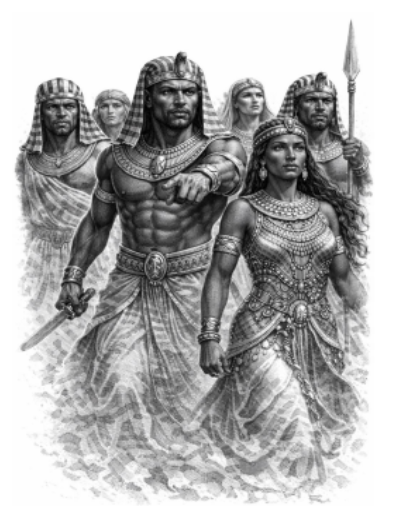
EGYPTIAN ENSEMBLE
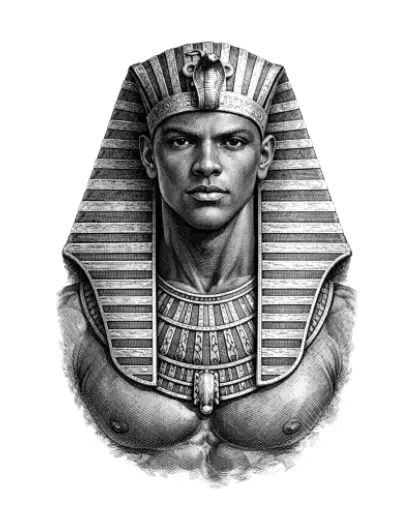
PHARAOH
EGYPTIAN ENSEMBLE – Mixed voices (Sacred Call and Funeral Chorus)
Vocal tone: raw, spiritual, breath-heavy.
The ensemble carries the majority of the musical material, beginning with a solo voice delivering an Adhan-inspired sacred call. Their opening melismatic phrases rise and fall in minor modal patterns. As the lament builds, additional voices join one by one, creating a layered texture that feels ancient and ritualistic. They do not perform harmonized melodies. Instead, they chant long vowels, whisper fractured phrases, moan, wail, and breathe in rhythmic swells. Their sound must resemble a Janazah funeral gathering: sparse, reverent, human. They are the grieving nation, unified in sorrow. Some members add spoken cries such as “my son” or “my child,” heightening the realism and emotional collapse of Egypt.
ADHAN SOLOIST – Member of Ensemble (Opening Sacred Call)
Vocal tone: melismatic, resonant, solemn.
One ensemble singer begins the piece with a sacred call modeled after the Islamic Adhan. The soloist must have the ability to carry long, rising phrases with emotional restraint and spiritual weight. Their voice sets the tone of holy devastation before the full chorus joins. This singer remains part of the ensemble afterward but functions as the ritual initiator of the lament.
PHARAOH – Male bass (Spoken, Gasped, Screamed Lines Only)
Vocal tone: broken, guttural, grief-stricken.
Pharaoh does not sing. His lines must be delivered through breath, gasps, choked speech, and finally a primal scream. His voice should feel stripped of authority, stripped of music, stripped of control. His pain enters through the ensemble’s wall of mourning, heightening the emotional stakes. His final scream is the sonic climax of the entire piece, cutting through the chorus like a wound tearing open.
NO ISRAELITE VOICES
The Israelites do not appear or contribute vocally in this number. The soundscape belongs entirely to Egypt’s mourning, isolating the Egyptian perspective and underscoring the gravity of what has taken place.
“The Cry” Musical Style & Direction
“The Cry” is a ritual lament, not a traditional musical number. Every musical choice must honor the gravity of the tenth plague and the ancient mourning traditions it references. The style draws from Middle Eastern sacred music, especially the Adhan and Janazah funeral chant, while maintaining a universal, cinematic atmosphere that lets the grief of Egypt fall heavy across the stage.
The piece begins in absolute silence. A single ceremonial drum strike signals the start, deep and echoing, like a nation’s heart breaking. From this void, one voice rises in melismatic phrases reminiscent of the Adhan. The line should float without rhythm or meter, rising and falling with breath-driven emotion. No vibrato flourish. No theatrical belt. The sound must feel spiritual, ancient, and reverent, as though calling an entire kingdom to witness its own sorrow.
As the solo call fades, the ensemble enters slowly. Their voices do not harmonize in a Western sense. They moan, wail, chant single tones, and create long vowel drones that stack like layers of grief. The sound is breath-heavy and intimate, inspired by Janazah mourning practices where repetition, simplicity, and raw humanity are central. These voices must feel unrestrained but never chaotic. The emotion lies in restraint, in the weight of what remains unsung.
No percussion continues after the opening drum. Instead, bowed low strings swell in and out, creating an atmospheric floor of tension and sorrow. Occasional aleatoric string phrases may tremble on top, like wind moving through an abandoned city. Every instrumental element must feel minimal and reverent, supporting the ensemble without directing it.
The ensemble’s chant “We bury our sons” forms the heart of the lament. It must be slow, repetitive, and devastating. Over this chant, individual mourners cry out “my son” or “my child” in non-lexical cries. These are not performed lines. They are human pain breaking into the ritual.
Pharaoh enters through this sonic landscape. His voice is not musical. It is spoken, gasped, cracked. He must sound like a king stripped to nothing. When he discovers his son, his final scream should break through the ensemble like thunder. It must be primal, ancient, and unrestrained. The scream is the true climax of the piece.
The song ends immediately after Pharaoh’s cry. No chord. No echo. No music. Just the silence of a kingdom swallowed by grief. This silence is sacred and must be held long enough for the audience to feel the full weight of the moment.
“The Cry” is not a performance. It is a mourning ritual onstage, a cinematic prophecy of sorrow, and the emotional low point of the musical.
[ENSEMBLE:]
[(A single voice begins with an Adhan-inspired sacred call. The tone is melismatic, rising and falling slowly in minor modal phrasing. After the first line, additional soloists join one at a time, creating an expanding
circle of sound. The stage remains dim, lit only by a cold blue wash that suggests early dawn over a grieving nation.)]
Ahhhh…
Aaaaaayyyy…
Oooooohhhhhh… He is gone…
He is gone…
[Additional ensemble members step forward gradually, layering new vowels and pitches like voices building into a spiritual storm. No rhythm. No harmony. Just expanding grief.]
[ENSEMBLE:]
[(Janazah-style funeral chorus. Slow, breath-heavy phrases. Voices chant on one or two tones, repeating without variation. Movement is
minimal. Some ensemble members sway or rock as if comforting themselves. The air should feel thick with lament.)]
We bury our sons
We bury our breath
We bury our light
We bury our dead
He is not here
He will not wake
We carry the silence
We carry the ache
[Under these lines, individual ensemble members cry audibly. Some sob. Some whisper “my son” or “my child.” These personal cries must
feel spontaneous and uncontrolled, never theatrical. They blend into the ritual chant like tears falling into water.]
[ENSEMBLE:]
[(The chant fractures. Voices break into breath-led repetitions of the word “Gone,” some sharp, some trembling, some fading. Minor dissonances form naturally as voices stack. The effect should feel like grief overwhelming musical structure.)]
Gone…
Gone…
Gone…
Gone…
[The ensemble’s sound swells, then trembles, as low strings quietly enter with a cold sustained drone, deepening the sense of mourning.]
[PHARAOH:]
[(He enters slowly through the sound, like a man stepping into a nightmare. His voice is not sung. It is spoken, hoarse, uneven. He pushes through the mourners who do not part for him. Lighting isolates him with a faint golden shadow suggesting the last trace of his former power.)]
What… is this?
Why do you cry? Who… is gone?
[ENSEMBLE:]
[(Their voices drop to a low, unified lament. The sound becomes one grieving body speaking through many mouths. They do not shout. They mourn.)]
They are gone.
All gone.
The sons of Egypt.
[(Pharaoh breaks into a run toward his chambers.)]
[(SFX: The chamber doors slam open. A sudden halt in the wind. The ensemble’s sound fades to a trembling hush as Pharaoh crosses the
threshold.)]
[PHARAOH:]
[(A soft gasp escapes him as he sees the lifeless form. He takes weak steps forward, each one slower than the last. His voice shrinks to a whisper.)]
No.
[(He moves closer.)] No.
[(He drops to his knees beside the body.)] No.
[(He touches his son’s face. Breath shatters.)] My son.
[(A silent beat. A moment of stillness as the entire stage holds its breath.)]
[(Pharaoh releases a scream. It must be raw, primal, and without pitch.
It should feel ancient, torn from the deepest part of a man who has lost everything.)]
AHHHHHHHHHHHHHHHH!
[(Let the scream echo and decay naturally. No music answers it. Allow the silence afterward to sit heavy and unbroken.)]