
The Price
“The Price” is Pharaoh’s grief-stricken solo, the moment the man behind the crown finally breaks. Immediately after his son’s death, he confronts the cost of pride, legacy, and the godhood he tried to claim. The song begins in a whisper over solo cello and soft piano, as if Pharaoh fears the sound of his own confession.
The musical style is restrained and cinematic. The cello carries a mournful minor-key pulse while Pharaoh’s bass voice enters nearly spoken, heavy with disbelief. Strings swell as his grief deepens. Subtle percussion and low sub-bass create pressure beneath the melody, mirroring the emotional collapse inside him.
As the verses unfold, his lament turns to bitter self-reckoning. His voice grows stronger, then angrier, then hollow again. Every phrase fractures the image of the divine ruler he pretended to be. By the bridge, the orchestration thins, leaving space for trembling breath as Pharaoh speaks upward to God with a mixture of awe, accusation, and exhaustion.
In the final section, his voice burns with sorrow rather than volume. The piano strikes harder. The strings tighten. He sings with the weight of a man realizing nothing he built could stop death at his door. The music then returns to stillness. Pharaoh whispers the last lines, acknowledging the throne now feels hollow. The final cello note fades into silence.
“The Price” reveals Pharaoh’s humanity and the devastating consequence of his defiance. It is grief carved into melody and the moment a king understands the power he trusted has abandoned him. “The Price” Primary Singers
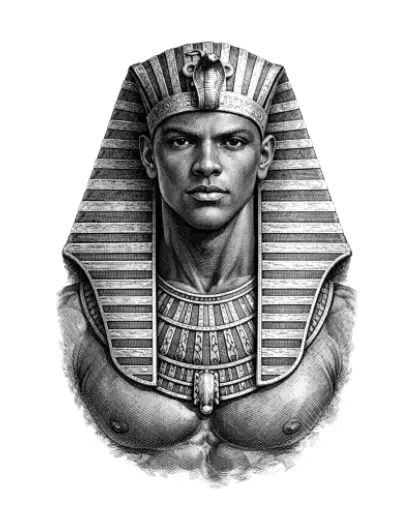
PHARAOH – Male bass-baritone (solo lead)
Vocal tone: deep, grief-stricken, restrained. Pharaoh is the only singer in this piece. His voice begins almost spoken, cracked by shock, then gradually widens into lament and controlled fury. He must carry the entire emotional arc: disbelief, grief, bitterness, accusation, and exhausted surrender. The tone should be rich and sorrow-filled, with the purity and weight of Gregory Porter or Johnny Hartman blended with theatrical storytelling. No vocal showmanship. No vibrato flourishes. Every note must feel like it costs him something. By the bridge, his voice questions God directly with a tremble of awe and anger. By the final lines, he collapses into a whispered confession of identity lost.
ORCHESTRAL TEXTURE – Solo cello, piano, low strings, and sub-bass
While not singers, the instruments function as emotional partners.
- The cello mirrors Pharaoh’s grief.
- The piano carries his internal pulse.
- The strings swell with the weight of judgment.
- The sub-bass underscores rising fury.
They respond to his voice rather than lead it, shaping the musical landscape around his confession.
NO ENSEMBLE VOICES
No Israelites.
No Egyptians.
No chorus.
The silence surrounding Pharaoh is intentional, emphasizing a king who once commanded nations now alone in grief. This isolation is the heart of the piece.
“The Price” Musical Style & Direction
“The Price” is a cinematic lament that blends orchestral sorrow with the fractured breath of a grieving father. The song must feel intimate at first, then expand into tragic weight as Pharaoh confronts the loss of his firstborn. This is not the roar of a tyrant. It is the collapse of a man who once believed he was divine.
The piece begins with solo cello in a slow 3/4 meter, bowing long, trembling tones that feel like mourning in an empty room. A soft piano adds sparse chords, leaving space for Pharaoh’s whispered entrance. His bass voice should sound stunned, hollow, and almost spoken. The opening orchestration must feel fragile, as if the music fears touching him too hard.
As Pharaoh’s sorrow deepens, the arrangement grows. Strings swell with muted intensity. Low sub-bass and atmospheric pads create a pressure beneath his confession. The music reflects a man realizing his power could not shield his child. When bitterness enters his tone, the piano strikes harder, and the cello adopts a heavier pulse, signaling the tension between grief and rising fury.
The bridge pulls everything back, giving Pharaoh space to question God with slow, deliberate phrasing. His voice stands nearly alone, surrounded only by low drones and faint, trembling strings.
The final section lifts into controlled fire. Pharaoh’s voice grows heavier, not louder, carrying the weight of a man who has lost every illusion of control. The music surges darkly beneath him, then falls away into near silence. He speaks the final lines with a broken whisper as the cello fades into stillness.
“The Price” must feel like the sound of pride collapsing. It is grief shaped into melody, a king stripped bare, and a confession carved into the quiet that follows.
[INTRO]
[(A solo cello begins in a slow 3/4 pulse, minor key. Its tone should feel hollow and aching, each bow drawn long, like breath struggling to steady. Soft piano enters sparingly, placing distant, resonant chords that leave space around Pharaoh’s grief.)]
[PHARAOH:]
[(sung, nearly spoken, voice fragile and stunned)] The boy is gone.
The house is clean. The gold still shines But none can see.
He was more than heir – He was breath in stone.
I carved his laughter
Into walls of my own.
[PHARAOH. Deep Male Bass voice (sung, rising in intensity):]
[(Sub-bass begins to swell underneath. The strings add a low trembling drone as Pharaoh’s anguish sharpens.)]
They daubed their doors
With borrowed blood
While I –
I stood like silence In blood and mud. [STRINGS SWELL – grief deepens, melody lengthens]
[(The full string section rises with tragic warmth. Bow strokes widen, as if sorrow itself expands into the room.)]
[PHARAOH. Deep Male Bass voice (sung):]
[(His phrasing steadies but gains emotional weight. Piano adds subtle low-octave strikes.)]
I have raised cities
With one breath
But I could not hold
The hand of death
[PHARAOH. Deep Male Bass voice (sung, bitter):]
[(Tone darkens. Cello shifts to heavier bowing. Subtle percussion tremor may appear under the line.)]
You spared the fields
And took the flame
You passed their homes
And crossed my name
[BRIDGE – lower strings bow slowly. Room for breath.]
[(Music thins dramatically. Cello holds long tones. Pharaoh stands alone in a sonic void. His voice should feel exposed, almost shaking.)]
[PHARAOH. Deep Male Bass voice (sung, slow, deliberate):]
Tell me, God – Is this Your grace?
To leave a throne And fill its place… …With silence?
[TRANSITION – rage enters the phrasing]
[(Strings tighten. Piano hits grow sharper. Low sub-bass pulses like a heartbeat under strain. Pharaoh’s voice becomes heavier, heated, but never shouted.)]
[PHARAOH. Deep Male Bass voice (sung, full voice, burning):]
Take your people
Take your priests
Take your shepherds
And your feasts
[PHARAOH. Deep Male Bass voice (sung, near breaking):]
[(Breath grows unsteady. The orchestra fractures around him, strings shaking, then pulling back.)]
Take your burdens
Take your God
Take the promise Take your blood!
[CLOSING – return to piano + cello. Tempo slows.]
[(The music collapses into near stillness. Only soft piano and a single cello line remain. Pharaoh sinks physically or emotionally.)] [PHARAOH. Deep Male Bass voice (spoken, whispered):]
I am Pharaoh.
But what am I now?
The pillars still stand. But now I bow.
[(The final cello note fades slowly into silence. No movement. No applause. Let the silence itself become judgment.)]